


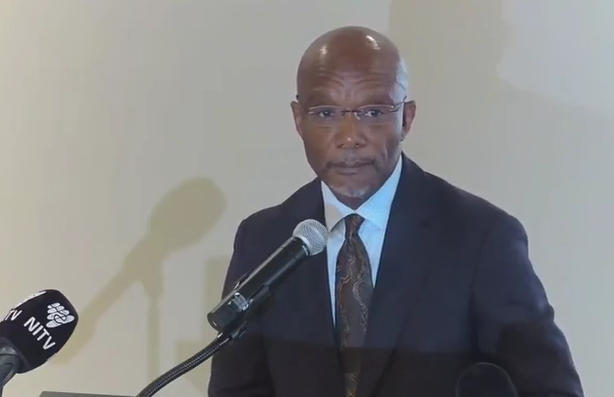
 Sydney, 13 November 2026. The United Nations Special Rapporteur on the rights of Indigenous Peoples, Albert Barume, concluded his official visit to Australia, undertaken from 2 to 13 November at the invitation of the Government. It is the third visit of this mandate to the country, following those of 2009 and 2017.
At the conclusion of his visit, the Special Rapporteur delivered his Preliminary Findings. They acknowledge some progress, such as the expansion of community-controlled organisations, the treaty process in Victoria and the First Nations Voice in South Australia. However, they warn that the situation of Aboriginal and Torres Strait Islander Peoples has deteriorated in several critical areas. Although they make up less than 4 per cent of the population, in 2025 they accounted for 37 per cent of the prison population and 60 per cent of children in youth detention.
The Rapporteur raises concern about five issues:
- the reversal of reforms in states and territories;
- the rise in racism following the 2023 referendum;
- violence against Indigenous women and girls;
- the removal of children from their families, which communities describe as a new Stolen Generation;
- the shortcomings in the implementation of the National Agreement on Closing the Gap.
In response, he proposes four foundational blocks: recognition, binding national standards, support for Indigenous Peoples’ own institutions and political representation. He will present his final report to the Human Rights Council in September 2027.
Read the Preliminary Findings below.

Statement by the Special Rapporteur on the rights of Indigenous Peoples
Official visit to Australia
Preliminary Findings
(Sydney, 13 November 2026)
1.Context
I wish to begin by acknowledging the Gadigal Peoples of the Eora Nation on which lands we are today and the Aboriginal and Torres Strait Islander Peoples who are the Traditional Owners of Australia. I pay my respects to their Elders past and present, their ancestors and future generations. I honour their enduring connection to their countries, cultures and traditions, and their determination to preserve their heritage and shape their own futures.
Today, I conclude my two-week official visit to Australia, undertaken at the invitation of the Government from 2 to 13 November 2026.
I express my sincere appreciation to all those who met with me and shared their experiences, perspectives and knowledge. I am particularly grateful to Aboriginal and Torres Strait Islander Peoples, their organisations and communities for their openness and trust. I also thank the Government for its cooperation, the National Indigenous Australians Agency, the Australian Human Rights Commission, particularly its Aboriginal and Torres Strait Islander Social Justice Commissioner, as well as other organisations that supported the preparation and conduct of this visit.
My team and I travelled extensively, visiting Canberra, Adelaide, Broome, Darwin, Cairns, the Torres Strait Islands, Townsville and Sydney. We met with Government officials, Aboriginal and Torres Strait Islander Peoples and their representative and community-controlled organisations, civil society organisations and academics, both in person and virtually. We also visited the Alexander Maconochie Centre in Canberra and Adelaide Women’s Prison in South Australia. I regret that meetings with Government officials in the Northern Territory and Queensland, as well as visits to the Holtze and Cleveland detention centres, could not take place because these government authorities refused to engage with my mandate.
I am deeply impressed by the strength, determination and leadership of Aboriginal and Torres Strait Islander Peoples in defending their rights, and pursuing solutions to their challenges. I am profoundly grateful to those who shared their experiences, including painful accounts of discrimination, injustice and violations of their rights.
I am the third Special Rapporteur on the rights of Indigenous Peoples to visit Australia, following visits in 2009 and 2017. Successive international human rights mechanisms have issued extensive findings and recommendations concerning the rights of First Peoples. These provide an important basis for assessing progress, persistent shortcomings and outstanding obligations.
Today, I offer preliminary findings and observations. I will present my final report on this visit to the United Nations Human Rights Council in September 2027.
2.Overview of noted progress
Australia has witnessed some advances in the recognition and exercise of Aboriginal and Torres Strait Islander Peoples’ rights. The expansion of First Peoples’ community-controlled organisations, Indigenous Ranger programmes, language revitalisation and cultural initiatives demonstrate the value of supporting Indigenous-led approaches. Native title-related rights now cover approximately 55 per cent of Australia’s landmass, while judicial decisions have strengthened recognition of First Peoples’ distinct rights and interests.
The National Agreement on Closing the Gap has established a significant framework for shared decision-making, while government investments in Indigenous procurement, cultural programmes and community-controlled services have created opportunities for progress. Victoria has advanced treaty-making and truth-telling, South Australia has established a legislated First Nations Voice, and the Australian Capital Territory has established an Aboriginal and Torres Strait Islander Elected Body that has legislated Closing the Gap commitments for its public sector. In the Torres Strait, I was also encouraged by First Peoples’ meaningful participation at all three levels of government, including the Torres Strait Regional Authority, although the model could still be improved.
These developments illustrate the potential for progress when reforms recognise the rights of Aboriginal and Torres Strait Islander Peoples, support their institutions and give effect to their self-determination. However, progress remains uneven, fragile and contradictory. Advances in some jurisdictions have been accompanied by political reversals in others. These contradictions highlight the absence of a consistent national commitment to implementing Indigenous Peoples’ rights.
3.Illustrative areas of concern
In Australia’s pledge as a candidate to the United Nations Human Rights Council 2018-2020, “it committed to give practical effect to the United Nations Declaration on the Rights of Indigenous Peoples and the World Conference on Indigenous Peoples’ Outcome Document.”1
Despite the above pledge and decades of commitments, inquiries and recommendations, including by UN mechanisms, the human rights situation of Aboriginal and Torres Strait Islander Peoples in Australia has deteriorated in several critical areas.
Measured against the findings of my predecessors, Aboriginal and Torres Strait Islander Peoples, who comprise less than 4 per cent of Australia’s population, accounted for 24 per cent of the prison population in 2008, 27 per cent in 2017 and 37 per cent in 2025. Their children now account for 60 per cent of those in youth detention, while their likelihood of being placed in out-of-home care has increased from 10 to 12 times that of non-Indigenous children since 2017.
Key targets under the Closing the Gap framework reveal persistent inequalities, and a deeply troubling situation. In 2021, only 68.1 per cent of First Peoples aged 20–24 had completed Year 12 or an equivalent qualification in education, compared with 90.7 per cent of their non-Indigenous peers. Health disparities are equally alarming. The suicide rate among Aboriginal and Torres Strait Islander Peoples increased from 22.9 deaths per 100,000 people in 2018 to 33.9 in 2024, almost three times the rate among non-Indigenous Australians. An estimated 19 per cent of First Peoples adults show biomedical signs of chronic kidney disease, while dialysis-related hospitalisation rates are more than eight times those of non-Indigenous Australians.2
More than thirty years after the Mabo decision recognised that the rights of Aboriginal and Torres Strait Islander Peoples to their lands and territories survived colonisation, native title remains Australia’s principal legal mechanism for recognising those rights. I received consistent concerns from Aboriginal and Torres Strait Islander Peoples about the limitations of the Native Title Act and its implementation, and due to its substantive importance, I will further elaborate on this, as well as on the impact of business activities and climate change, in the forthcoming full report.
A.First Peoples’ rights are unsafe in the hands of states and territories
I am deeply concerned that the protection of First Peoples’ rights in Australia remains fragmented, inconsistent and vulnerable to political change in different states and territories. Under the federal system, states and territories exercise authority over key matters, including criminal justice, child protection, housing and cultural heritage. This has allowed state and territory governments to adopt widely differing standards of protection, and to reverse important reforms with little regard for human rights.
I heard troubling accounts of progress on Aboriginal and Torres Strait Islander Peoples’ rights being undone following changes of Government. In Queensland, the Path to Treaty Act 2023 was repealed following the 2024 election, bringing the state’s truth-telling inquiry to an abrupt end. I also heard concerns about the reversal of Indigenous procurement commitments. In the Northern Territory, work towards a treaty was halted following the 2024 election, while changes to youth justice laws, including the reduction of the minimum age of criminal responsibility to 10 years, have further undermined the rights of First Peoples. Victoria passed Australia’s first statewide treaty in October 2025, establishing a permanent representative body for First Peoples, Gellung Warl, yet the opposition has pledged to repeal it if elected in November 2026.
Fundamental rights cannot be made contingent on electoral outcomes or the priorities of successive governments. These reversals disregard years of work, undermine trust in public institutions and jeopardise national progress. During my discussions with federal authorities, officials repeatedly referred to resistance from states and territories as an obstacle to national progress. Such explanations reveal a serious gap in accountability but cannot justify continued inaction.
I recall that Australia’s international human rights obligations apply throughout its territory, irrespective of its internal legal arrangements. While responsibilities for implementing these obligations may be distributed between different levels of government, the federal government cannot invoke federalism to justify failures to protect Aboriginal and Torres Strait Islander Peoples’ rights. Nor does the absence of recognition in domestic legislation diminish rights under international law. The national Commonwealth Government remains the sole internationally responsible duty-bearer for ensuring that those rights are respected, protected and fulfilled across all states and territories.
I therefore urge the Australian Government to assume a stronger leadership and accountability role by establishing enforceable national mandatory minimum standards for the protection of First Peoples’ rights, consistent with the United Nations Declaration on the Rights of Indigenous Peoples (the Declaration) and other relevant international instruments. These standards must be developed with Aboriginal and Torres Strait Islander Peoples through their own representative institutions and accompanied by effective implementation, monitoring and remedies. The enjoyment of fundamental rights of Indigenous Peoples in Australia must not depend on where First Peoples live or which government is in power.
B.The aftermath of the referendum: heightened racism and missed opportunity for recognition and national representation
The rejection of the proposed Aboriginal and Torres Strait Islander Voice to Parliament in the 2023 referendum has had profound negative consequences for First Peoples’ rights. Throughout my visit, many described deep distress and disillusionment, having experienced the outcome as a rejection of their identity, rights and place in Australian society. Aboriginal and Torres Strait Islander Peoples also told me that there has been a rise in incidents of racism directed at them after the unsuccessful referendum.
I wish to emphasise that fundamental human rights must never be made dependent on the outcome of a popular vote. The rights of Aboriginal and Torres Strait Islander Peoples to recognition, participation and self-determination are not a threat to the rights of others. The rejection of the proposed Voice has not diminished these rights or relieved Australia of its obligations to respect, protect and fulfil them. I heard disturbing accounts of heightened racism and hate speech during and following the 2023 referendum. Indigenous campaigners described racist intimidation and threats; and they reported that the referendum had emboldened people to express racist views openly, including online. Some raised concerns about hate speech and the normalisation of racist narratives, particularly about Indigenous children and youth crime. These accounts expose entrenched patterns of structural racism and institutional discrimination and underscore the urgent need for Indigenous-led truth-telling and public education to confront historical injustices, and for concerted action to combat racism and discrimination. I urge a systematic review and reform of the laws, policies and institutional practices that perpetuate discrimination.
Following the withdrawal of funding and subsequent cessation of the National Congress of Australia’s First Peoples, and the rejection of the Voice, Australia remains without an effective, nationally representative mechanism through which First Peoples can participate in decisions affecting them. While representative arrangements exist in some jurisdictions, they cannot substitute for a national mechanism. This gap seriously undermines the effective implementation of the rights to self-determination and participation.
The referendum was supposed to serve as a means to achieve constitutional recognition for First Peoples. The outcome should not lead the federal Government to abandon that commendable objective which remains vital for promoting justice, equality, and reconciliation. I encourage the Commonwealth Government to renew dialogue with Aboriginal and Torres Strait Islander Peoples and the broader public on appropriate pathways forward. Moreover, the Federal Government should take immediate steps, in partnership with First Peoples, to establish an effective national mechanism for representation and participation.
C.Growing overrepresentation of Aboriginal and Torres Strait Islander Peoples in detention
The alarming growing overrepresentation of Aboriginal and Torres Strait Islander Peoples in Australia’s criminal justice systems is among the most persistent and shocking human rights concerns I encountered. It cannot be understood separately from the continuing effects of colonisation, dispossession, structural racism and inequalities. As of 30 June 2025, 17,432 Indigenous adults were in prison, an increase of 10 per cent in one year. This means that Australia is moving further away from its commitment to reduce Indigenous adult imprisonment by at least 15 per cent by 2031.3
The situation of Indigenous children is particularly disturbing. In June 2025, Aboriginal and Torres Strait Islander children aged 10–17 constituted 60 per cent of children in detention, despite representing 6.6 per cent of the national population in that age group. First Peoples children are 21 times as likely as non-Indigenous children to be detained.4 Aboriginal and Torres Strait Islander Peoples repeatedly described how children experiencing poverty and family separation are drawn into cycles of policing, detention and further institutionalisation.
Laws and criminal justice practices disproportionately affect Aboriginal and Torres Strait Islander Peoples, often for non-violent offences. In one location, Indigenous youth leaders described to me racial profiling and excessive policing, including being stopped and questioned without apparent justification. I also heard how restraining orders and fines can lead to imprisonment when people lack stable housing, reliable communication or access to legal assistance. Other Indigenous representatives described people leaving prison without adequate accommodation or transport, placing them at risk of breaching release conditions.
I was informed of several jurisdictions adopting increasingly punitive approaches, including tighter bail restrictions, increased penalties and reversals of the minimum age of criminal responsibility. I am particularly alarmed to hear that in Queensland, 92 per cent of children in youth detention are held on remand.5 In Townsville, Elders working with children at the Cleveland Youth Detention Centre described prolonged confinement in cells, inadequate access to healthcare and education, and children as young as 10 spending extended periods in police watchhouses. Elders face difficulties in obtaining regular access to detained children, despite the importance of cultural connection and trusted relationships for their wellbeing and rehabilitation. In the Northern Territory, I heard similar concerns about overcrowding, detention far from families and Country, and inadequate opportunities for rehabilitation. These accounts raise serious concerns about the respect for the presumption of innocence in Australia.6
I also urge Australia to establish a national minimum age of criminal responsibility of at least 14 years, without exceptions, and to review laws and practices that disproportionately criminalise Aboriginal and Torres Strait Islander Peoples, including restrictive bail provisions, mandatory sentencing and racial profiling. Similarly, I urge Federal and State Governments to end the detention of children in police watchhouses; to end the strip searching of children; to review the use of electronic monitoring and remote court-ordered placements of children; to restore the obligation to consider diversion and other alternatives before a child is prosecuted.
D.Violence against Indigenous women and girls: Incomplete redress
The crisis of missing and murdered Aboriginal and Torres Strait Islander women and children remains of grave concern. It is estimated that at least 476 Aboriginal and Torres Strait Islander women and gender-diverse people were victims of homicide between July 1989 and June 2023, while significant gaps in official data continue to obscure the full extent of the crisis.7 Despite repeated inquiries and recommendations, families continue to struggle for truth, justice and accountability. Aboriginal women expressed to me profound frustration at the lack of meaningful action and recognition for families whose loved ones had been murdered or disappeared.
I was particularly disturbed by accounts of First Peoples women who, despite being survivors of violence, are misidentified as perpetrators by law enforcement agents and subsequently subjected to criminal proceedings, women who called the police for help and were instead charged with breach of peace or disorderly behaviour. Other Indigenous women described to me how discriminatory risk assessments, inadequate recognition of coercive control and failures to understand women’s experiences of violence can result in their criminalisation. Women also described fear that seeking assistance or reporting abuse could lead to the removal of their children.
Access to safety and justice remains particularly difficult for Indigenous women and girls in regional and remote communities. I heard accounts about how long distances, inadequate transport, language barriers and the suspension of local courts can prevent women from obtaining legal assistance and protection.
I am equally concerned by the treatment of Indigenous women in custody. During visits to correctional facilities and meetings with relatives, I heard allegations of sexual harassment, inadequate healthcare, restrictions on family contact and insufficient access to culturally appropriate support. Particularly disturbing were accounts of incarcerated women being shackled during childbirth and of sistergirls being placed in men’s prisons, where they faced serious risks of sexual violence. These demand urgent independent scrutiny and effective safeguards consistent with international human rights standards.8
Closing the Gap Target 13 aims to reduce all forms of family violence and abuse against Aboriginal and Torres Strait Islander women and children, alongside the related National Plan to End Violence Against Women and Children, but there is currently no aggregated data to measure developments under the Target.9 I recognise the initiatives undertaken by Australian governments to address violence against women. However, Aboriginal and Torres Strait Islander women repeatedly emphasised that government responses remain fragmented, inadequately resourced and insufficiently informed by their knowledge and priorities.
I urge all federal and state and territory governments to treat violence against Indigenous women and girls as an urgent human rights priority. This requires the effective implementation of outstanding recommendations concerning missing and murdered Aboriginal and Torres Strait Islander women and children; independent and thorough investigations into deaths, disappearances and failures of protection; reform of policing and justice practices that criminalise victim-survivors; and guaranteed access to culturally safe legal assistance, crisis accommodation, healthcare and long-term support. Above all, Aboriginal and Torres Strait Islander women must exercise genuine leadership and decision-making authority over the design, implementation and evaluation of policies and services intended to prevent violence and protect them, supported by adequate and sustained resources.
E.Care system that seems to be creating a new Stolen Generation
In 2017, my predecessor raised serious concerns about the increasing removal of Indigenous children and called for urgent measures to support families, prevent removals and ensure compliance with the Aboriginal and Torres Strait Islander Child Placement Principle. During my visit, I was deeply disturbed to learn about the continued removal of Indigenous children from their families and communities on a scale that First Peoples repeatedly described to me as a new Stolen Generation. In 2025, 20,842 Indigenous children were in out-of-home care, representing 52.2 per 1,000 children, compared with 47.3 in 2019.10 Rather than closing the gap, the over‑representation of Indigenous children in out‑of‑home care is worsening.
Indigenous parents, Elders and community organisations described child protection systems that too often respond to poverty, overcrowded housing and inadequate family support by removing children rather than addressing the conditions placing families under pressure. Parents struggling to meet requirements for reunification are facing persistent barriers to securing adequate housing and essential services. Testimonies described children being placed with non-Indigenous carers while extended families received insufficient support.
I also heard concerns about children moving from out-of-home care into the justice system, perpetuating cycles of institutionalisation, trauma and disconnection from their Indigenous communities.
The Australian State has an obligation to protect children from harm. The best interests of Indigenous children must be assessed holistically, considering their rights to safety, family life, cultural identity, their community and connection to Country.
In 2025, for states and territories with available data, the proportion of Indigenous children in out-of-home care living with relatives, kin or Indigenous carers ranged from 25.4 per cent in the Northern Territory to 82.8 per cent in Victoria.11
Against this background, I am particularly concerned by the Northern Territory’s Care and Protection of Children Legislation Amendment (Every Child Matters) Act 2026. The Act weakens the Aboriginal and Torres Strait Islander Child Placement Principle with a general placement framework, weakens the express right of Indigenous children and families to participate in significant decisions, and changes short-term parental responsibility arrangements that may affect opportunities for family reunification. Indigenous representatives in the Northern Territory strongly opposed the reforms, describing a lack of meaningful consultation and warning that the changes would further undermine kinship care and family reunification.
The Australian Government cannot claim to have addressed the legacy of the Stolen Generations while Indigenous children continue to be removed from their families and Peoples at increasing rates. The Bringing Them Home report called not only for apologies and reparations, but also for guarantees of non-repetition and Indigenous self-determination. I urge the Australian Government to fully implement the Aboriginal and Torres Strait Islander Child Placement Principle, invest in prevention and family reunification, and ensure that Indigenous Peoples exercise genuine authority over the systems responsible for the protection and care of their children. I urge the Northern Territory Government to review the Every Child Matters Act in genuine partnership with Aboriginal families and organisations, including by restoring the Child Placement Principle. The State’s responsibility extends beyond responding to individual cases of harm: it must address the structural conditions driving removals and prevent the repetition of practices that threaten Indigenous families, cultural continuity and collective identity.
F.Access to adequate housing and essential services
During my visit, Indigenous Peoples repeatedly raised serious concerns about the lack of adequate housing and access to essential infrastructure, particularly in remote Indigenous communities. I was particularly concerned by accounts of the closure of the Indigenous-run YiSSA accommodation service in Darwin, which provided shelter for people experiencing homelessness and other vulnerabilities, housing 350 to 400 people a week. The closure took place without adequate consultation or transition arrangements, while a much smaller replacement facility was located some 100 kilometres away, with limited access to transport and affordable food. Housing insecurity contributes to the removal of children into out-of-home care and undermines the successful reintegration of people leaving prison.
In the Kimberley and Northern Territory, Indigenous representatives described a widespread and particular type of energy insecurity affecting mostly First Peoples households that are supplied by pre-paid electricity systems that disconnect supply when credit expires. First Peoples told me this is because they are stereotyped as unreliable for payment. In poorly insulated and overcrowded homes, where temperatures can reach 47 degrees Celsius, frequent disconnections pose serious risks to health and safety, particularly for children, older persons, pregnant women and people requiring refrigerated medication. Electricity costs can consume up to a quarter of already limited household incomes. Progress against the Closing the Gap target on access to essential services cannot currently be assessed because of insufficient data.12
G.Flawed implementation of the National Agreement on Closing the Gap
The 2020 National Agreement on Closing the Gap represented a significant institutional development having been negotiated and agreed between the Coalition of Aboriginal and Torres Strait Islander Community-Controlled Peak Organisations and all Australian governments at federal, state and territory levels. Importantly, its four Priority Reforms address foundational issues previously excluded from the Closing the Gap framework. These reforms recognise that achieving substantive change requires governments to fundamentally transform how they develop and implement policies and programmes. The federal Government described the Agreement as a historic shift towards sharing power with First Peoples.
However, halfway through the Agreement’s implementation, progress remains deeply concerning and uneven across targets and jurisdictions and the accountability mechanism has not yet been established. While the target for preschool enrolment has been met and improvements have been recorded in employment and the recognition of Indigenous rights and interests in land and sea, four targets are deteriorating: adult imprisonment, early childhood development, children in out-of-home care and suicide rates. Progress in other areas, including life expectancy, education and housing, remains insufficient. Progress cannot yet be assessed for several targets.13 Notably, progress on measures of service access, such as preschool enrolment, has not been accompanied by corresponding improvements in key outcomes, including early childhood development.
In relation to health, Indigenous representatives highlighted persistent inequalities in access to preventive and culturally appropriate healthcare, particularly in remote areas, and high prevalence of chronic conditions, including diabetes and kidney disease among First Nations. In the Kimberley, I learned how patients requiring dialysis previously had to relocate to Perth, more than 2,000 kilometres away, separating them from their families, communities and Country. Indigenous health representatives stressed the need for greater authority over health service planning, delivery and evaluation, together with sustained funding and stronger accountability for culturally safe care.
The persistent inequalities between Indigenous Peoples and non-Indigenous Australians across virtually all socioeconomic indicators reflect deeply ingrained interconnected patterns of discrimination, marginalisation and historical and ongoing injustices. Fragmented policies, institutional silos and funding arrangements across different levels of government continue to undermine Indigenous community-led solutions.
The transformative potential of the National Agreement lies principally in its four Priority Reforms, yet their implementation remains seriously inadequate. While comprehensive data to assess progress against these reforms remain unavailable, the Productivity Commission’s 2024 independent review found that governments had failed to fully grasp the nature and scale of the change required and too often consulted First Peoples on predetermined solutions rather than genuinely sharing decision-making authority.14 These findings were reinforced by the 2025 Aboriginal and Torres Strait Islander-led review15 and closely reflected the concerns raised during my visit.
Given that the Agreement is not legally enforceable, stronger accountability is essential. I welcome the Commonwealth Government’s consideration of greater scrutiny of intergovernmental funding, improved coordination across ministries and direct funding to Indigenous organisations where jurisdictions fail to make progress. Such measures should be pursued urgently, with the objective of transferring meaningful authority and resources to Indigenous Peoples to develop and implement solutions grounded in their own priorities, knowledge and circumstances.
As the Productivity Commission observed,16 there continues to be an assumption that “government knows best”, contrary to the Agreement’s commitment to shared decision-making. This reflects a deeper failure to recognise Indigenous Peoples as rights holders entitled to determine their own priorities and solutions. Giving effect to the right to self-determination requires a fundamental shift in power, resources and decision-making authority. Without such a shift, Closing the Gap remains an unfulfilled promise while the very inequalities it seeks to overcome continue to widen.
4.Preliminary observations
Nearly two decades after the first visit to Australia of a UN Special Rapporteur on the rights of Indigenous Peoples, many fundamental concerns remain unresolved. The central challenge is not simply to close socioeconomic gaps, but to transform the relationship between the Australian State and Aboriginal and Torres Strait Islander Peoples, grounded in recognition, self-determination, meaningful participation and accountability, in accordance with the United Nations Declaration on the Rights of Indigenous Peoples.
The 2008 National Apology was an important milestone, but historical acknowledgement has not been matched by comprehensive truth-telling, reparations and institutional transformation. The proposed Makarrata Commission, envisaged to support treaty-making and truth-telling, has not materialized.
The absence of enforceable national standards allows the protection of Indigenous Peoples’ rights to vary significantly across jurisdictions and makes progress vulnerable to political changes.
New generations of Aboriginal and Torres Strait Islanders are born into the same pattern of marginalization and non-recognition, perpetuating human suffering, as reflected in incarceration rates, domestic and sexual violence, substance abuse, health outcomes, further dispossession of lands and resources, among others.
New challenges related to climate change, energy transition, resource extraction, disrespect and hate speech fuelled by social media compound existing patterns of discrimination.
The rejection of the 2023 constitutional referendum has exposed the fragility of reconciliation efforts and increased discriminatory attitudes. Indigenous representatives described profound hurt, division and a resurgence of overt racism and hostility, including in schools, public discourse and sporting events.
Reconciliation must be understood as a process of transforming the relationship between the State and First Peoples, addressing historical injustices and ensuring that their consequences are not passed to future generations.
Historical injustices continue to shape laws, institutions and policies affecting Indigenous Peoples, particularly in justice, child protection, land rights and access to essential services.
The failure of constitutional recognition has created a national leadership and representation vacuum with no clear pathway towards needed and long overdue structural reform.
Australia’s federal structure is used as a shield against international human rights obligations. The Commonwealth has an essential role in ensuring that international obligations are respected throughout Australia, irrespective of the division of domestic responsibilities. The current picture of fragmented laws, uneven protections and policy reversals across states and territories underscores the need for nationally consistent, enforceable human rights standards and strong Commonwealth leadership.
The four Priority Reforms under the National Closing the Gap Agreement concerning shared decision-making, community control, government transformation and access to data in the framework are positive and necessary. However, the predominantly socio-economic focus of the Agreement must be complemented by recognition of self-determination, collective rights, power-sharing and accountability for implementation.
Persistent and, in some areas, worsening rights violations and concerns are reflected in overincarceration of Indigenous men, women, children and youth; deaths in custody; child removals; inadequate access to housing, health and education. These demand urgent action across the country, including by the Commonwealth Government where state and territory legislative and policy frameworks are not in compliance with Australia’s international human rights obligations.
The government has not put in place the foundational blocks upon which to build the implementation of Indigenous Peoples’ rights as provided for in the Declaration. Without those foundational blocks, well-intentioned efforts and initiatives may not yield the expected results. These foundational blocks are cumulative, and once in place, will enable commendable initiatives like Closing the Gap to produce better results.
- The first foundational block is recognition, which consists of acknowledging the unique historical injustices suffered by First Nations and a statement of intention to remedy these injustices adequately. This can start with an apology, as done by the Australian state in 2008, but it must go beyond that. The recognition of historical injustices makes it clear that the State is not designing a privileged regime for First Peoples, but a remedial framework. Truth-telling is also part of this, as well as reparation, compensation, and guarantees of non-repetition.
- The second foundational block is adopting, preferably constitutional provisions or federal-level laws on Aboriginal and Torres Strait Islander Peoples that set the standards of protection and implementation of their rights. This could also include introducing the United Nations Declaration on the Rights of Indigenous Peoples into domestic legislation and even a national action plan. The failed constitutional amendment would have been part of this foundational block, which would also serve as mandatory standards for the uniform protection and implementation of First Peoples’ rights across the country, including by states and territories.
- The third foundational block is to recognize, protect, and support Indigenous Peoples’ traditional and decision-making institutions, which are essential components of self-determination. This block includes also traditional justice systems and traditional knowledge.
- The fourth foundational block is the political representation of First Peoples to ensure effective and meaningful participation in public affairs on an equal footing with all other Australian citizens. Efforts have been attempted towards this foundational block, but these were either not completed or not continued. This is an operational constituting element of self-determination.
This concludes my preliminary observations on my 2026 official visit to Australia as Special Rapporteur on the rights of Indigenous Peoples. I encourage the federal, state and territory governments to forge a new partnership with Aboriginal and Torres Strait Islander Peoples, grounded in a nation-to-nation relationship, recognition, mutual respect and self-determination, for the generations to come.
Notes
- https://www.ohchr.org/en/statements-and-speeches/2017/04/end-mission-statement-united-nations-special-rapporteur-rights ↩
- https://www.aihw.gov.au/reports/chronic-kidney-disease/chronic-kidney-disease/contents/first-nations-people ↩
- https://www.abs.gov.au/statistics/people/crime-and-justice/prisoners-australia/latest-release; https://www.pc.gov.au/closing-the-gap-data/dashboard/outcome-area/criminal-justice/ ↩
- https://www.aihw.gov.au/reports/youth-justice/youth-detention-population-in-australia-2025/contents/first-nations-young-people ↩
- Australian Institute of Health and Welfare, Youth justice in Australia 2024–25, Queensland jurisdictional overview, updated 12 May 2026. ↩
- https://www.abs.gov.au/statistics/people/crime-and-justice/prisoners-australia/latest-release ; https://www.pc.gov.au/media-speeches/articles/closing-the-gap-youth-justice/ and https://spcommreports.ohchr.org/TMResultsBase/DownLoadPublicCommunicationFile?gId=29959 ↩
- Samantha Bricknell and Hannah Miles, Homicide of Aboriginal and Torres Strait Islander Women, Statistical Bulletin No. 46, Australian Institute of Criminology, October 2024. ↩
- https://www.unodc.org/documents/justice-and-prison-reform/Bangkok_Rules_ENG_22032015.pdf ↩
- https://www.pc.gov.au/closing-the-gap-data/dashboard/outcome-area/family-safety/ ↩
- Productivity Commission, Closing the Gap Annual Data Compilation Report, July 2026, Canberra, page 46. ↩
- Idem, page 51. ↩
- See the Closing the Gap Dashboard at https://www.pc.gov.au/closing-the-gap-data/dashboard/ ↩
- Productivity Commission, Closing the Gap Annual Data Compilation Report, July 2026, Canberra ↩
- Productivity Commission, Review of the National Agreement on Closing the Gap, Study report, 2024, volume 1, Canberra, page: 4. ↩
- Jumbunna Institute for Indigenous Education and Research, University of Technology Sydney, Closing the Gap: Independent Aboriginal and Torres Strait Islander Led Review, June 2025 ↩
- Productivity Commission, Review of the National Agreement on Closing the Gap, Study report, 2024, volume 1, Canberra, page: 4. ↩


